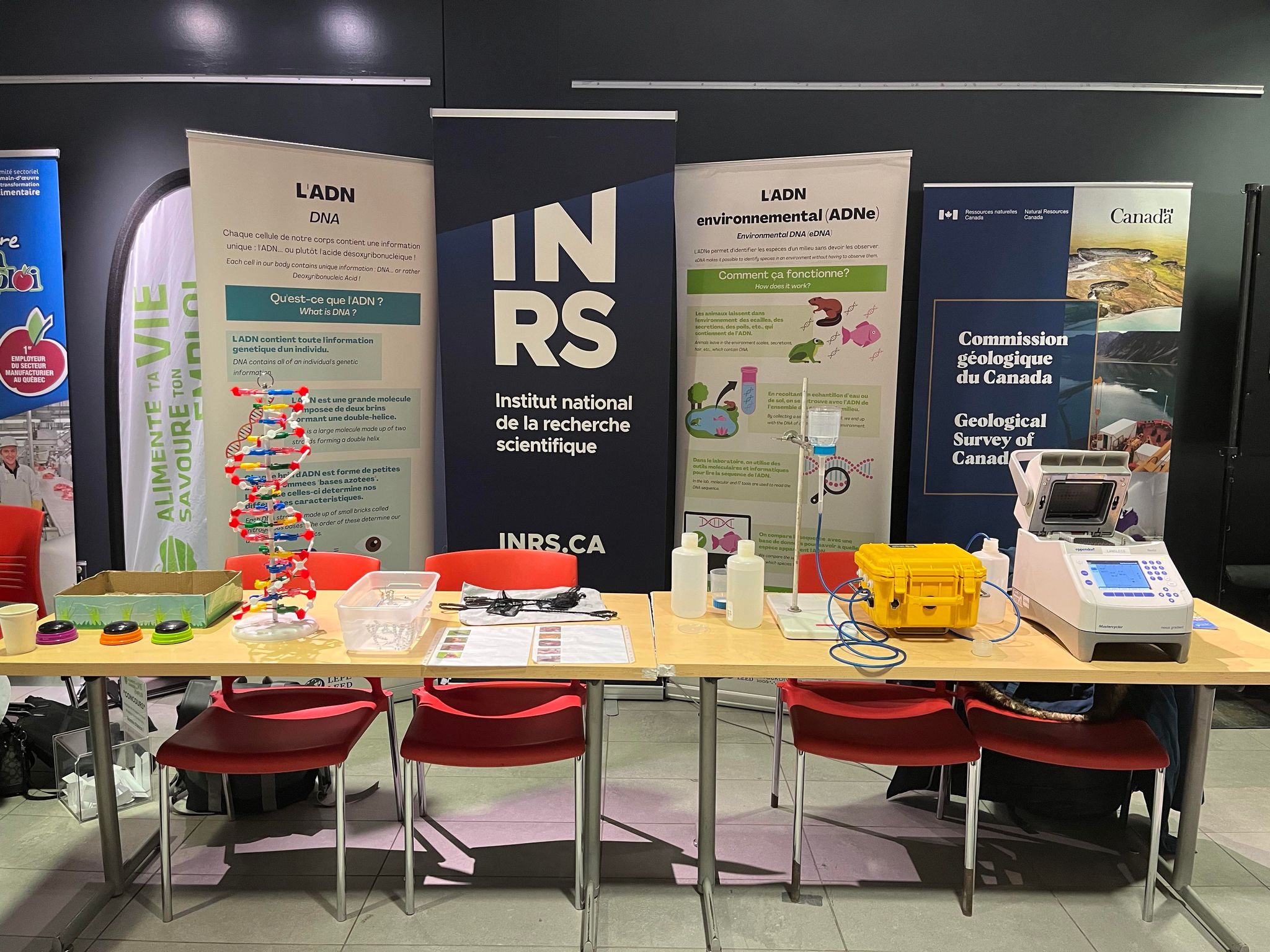
All living organisms—whether fish, insects, or plants—leave traces of their DNA in the environment. This DNA ends up in water, soil, air, or snow through dead cells, waste, or mucus. Scientists call it “environmental DNA,” or eDNA. By collecting a simple water or soil sample, researchers can detect which species are present without needing to see or capture them.
Why it matters
eDNA is a powerful, non-destructive way to monitor biodiversity. It allows us to detect rare, invasive, or culturally important species quickly, accurately, and at low cost. For example, one bottle of lake water might reveal the presence of endangered fish, harmful invasive species, or even animals that are important for Indigenous communities. This information helps us make better decisions about how to protect nature.
A tool for the future
As climate change and human development put pressure on ecosystems, tools like eDNA are becoming essential. Communities, governments, and industries are now using eDNA to track species, guide conservation, and issue permits for new projects. But to fully benefit from this tool, we need standardized methods and shared resources—so that the data is reliable, accessible, and ready to support informed decision-making.
Learn more about eDNA
Discover these resources to better understand environmental DNA and its importance in protecting biodiversity.
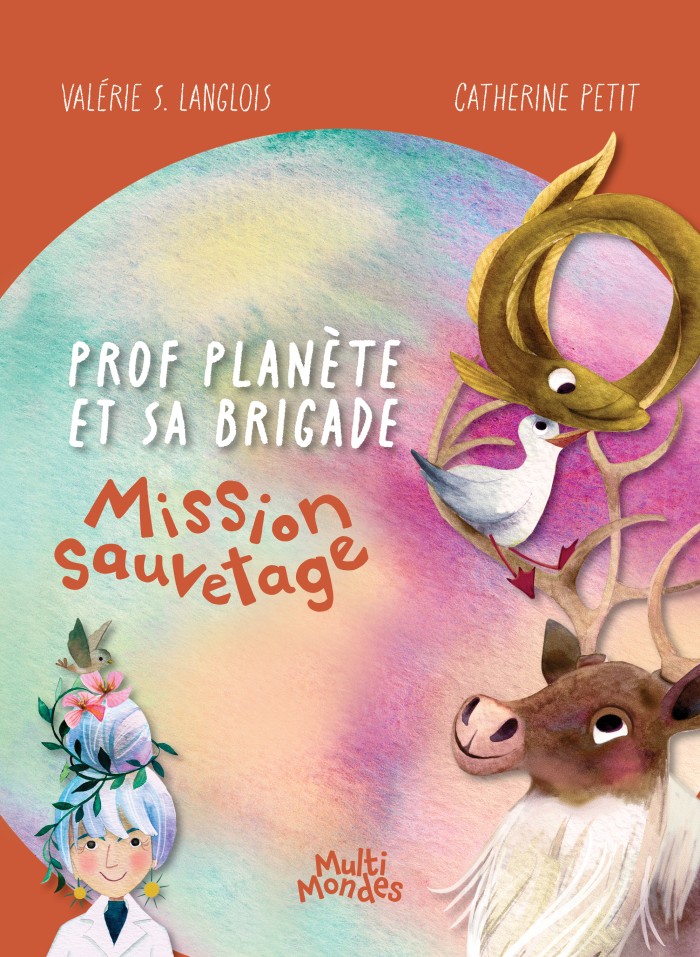
Prof Planète et sa brigade : Mission sauvetage
By Valérie S. Langlois and illustrated by Catherine Petit
An exciting adventure where Prof Planète and their team use environmental DNA to find three missing people. A fun way to discover how DNA traces can help locate species in nature.
Invisible Footprints: Protecting Nature with Environmental DNA
By Valérie S. Langlois, Annie Claude Bélisle, Marie-Pier Brochu, Marie-Lee Castonguay, Julie Couillard, Fidji Sandré, Tuan Anh To
A comprehensive collective work on environmental DNA covering its history, practical applications (sturgeon monitoring, invasive species detection), detection technologies, standardized protocols, and perspectives for Quebec and Canada.

Educational Space - Génome Québec
Discover interactive and fun educational resources to understand genomics and environmental DNA. A space designed for learning through play!

Biodiversity: Environmental DNA goes beyond water
A Québec Science article exploring how environmental DNA is revolutionizing the way we monitor biodiversity, beyond aquatic environments.